In 1797, the Navy built a warship out of white oak. During the War of 1812, British cannonballs struck her hull, and the crew swore they watched the shot bounce. One sailor reportedly hollered, "Huzzah! Her sides are made of iron!" The name stuck: Old Ironsides. Plot twist — there was no iron. It was wood.

Same wood, by the way, are the oak barrels that hold nearly every drop of American whiskey. Tough enough to stop a cannonball. Classy enough to age your bourbon. And now? It's about to be the prettiest thing in your kitchen.
Same wood, by the way, are the oak barrels that hold nearly every drop of American whiskey. Tough enough to stop a cannonball. Classy enough to age your bourbon. And now? It's about to be the prettiest thing in your kitchen.
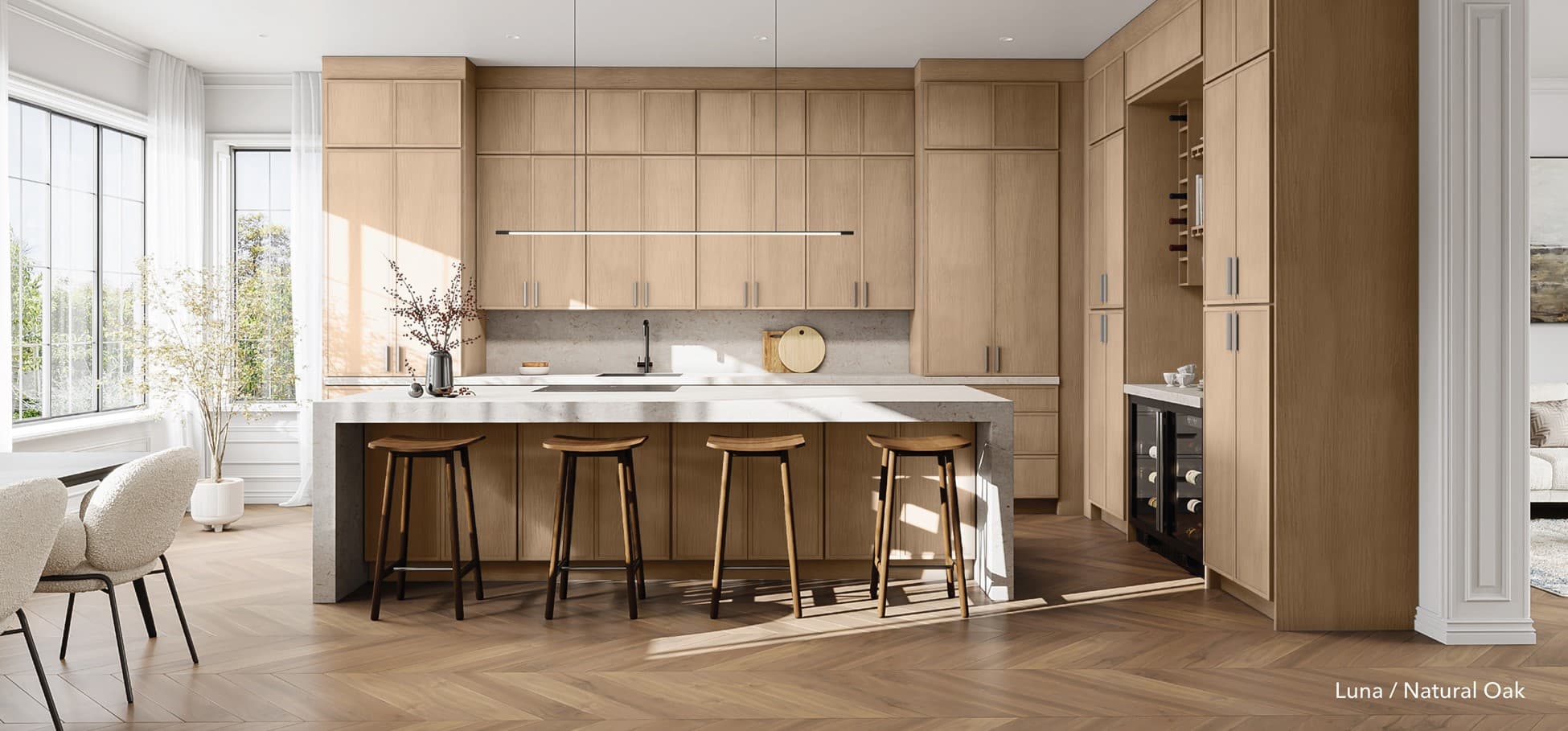
If you've been saving photos of white kitchen cabinets and wooden kitchen cupboards but find pure white a little cold, here's your warm middle ground. Meet Natural Oak — our new stain, out now in Galaxy and Luna.


Natural Oak is the strong, silent type
What it's made of: Real rift cut white oak. The cut runs straight and tight and makes the wood unusually stable, so it shrugs off the humidity swings that warp lesser cabinets. (It can handle your kitchen and your bathroom.)
How it ages: The tone shifts gently with light over the years, it doesn't fade, it deepens.
How to keep it happy: A soft cloth and a little mild soap. Skip the harsh, abrasive stuff.
What to expect: No two doors will match exactly.
Where it shines: It looks right at home on shaker style cabinets and clean, modern profiles alike, proof that great shaker kitchen cabinets start with the right wood.

A fine coat is worked into the open pores of the white oak, lifting the surface into something warm and honeyed, the grain softened rather than scrubbed away. Picture a white wood kitchen that actually feels warm instead of clinical. It's the quiet backbone of the Scandinavian kitchen look — pale, organic, easy to live in — and it's exactly where design is heading.
That's not just our opinion. In a recent NKBA survey, designers named white oak the single most popular cabinet wood heading into 2026, and most homeowners now say they choose natural materials specifically to feel more connected to the living world.

Catching Rays
Tilt a white oak board toward the light and you'll catch soft, ribbon-like streaks running across the grain, glinting and then disappearing as you move. That's ray flecking, and it's one of the most quietly beautiful things wood can do.
That shimmer and the wood's legendary toughness are the same thing. Those flecks are medullary rays: bands of cells that once carried water sideways through the living tree, radiating from the heart outward like spokes, or like rays of the sun. White oak packs those rays and its pores with tiny balloon-like structures called tyloses, and that density is exactly why the wood is watertight, why it could be coopered into a barrel that won't weep whiskey, why it could stop a cannonball. It’s got beauty and the muscles minus the gym membership.
Furniture makers have chased that glow for generations. A century ago, Gustav Stickley built the whole Arts and Crafts movement on flecked oak; antique dealers still call the showiest boards tiger oak.

Natural Oak is a complimentary, generous neighbor
It makes almost any color look better. A few pairings Fabuwood Creative Director Kerrie Kelly recommends:
Natural Oak + Dove — her current favorite. "Dove brings a soft sophistication that allows the warmth of Natural Oak to shine," Kelly says, calling the result
"elevated, approachable, and perfectly suited for today's desire for understated sophistication."
Natural Oak + Indigo — for clients who want a statement. Indigo "introduces depth and personality while allowing Natural Oak to keep the overall space feeling grounded and inviting." The contrast, she notes, feels
"fresh yet enduring."
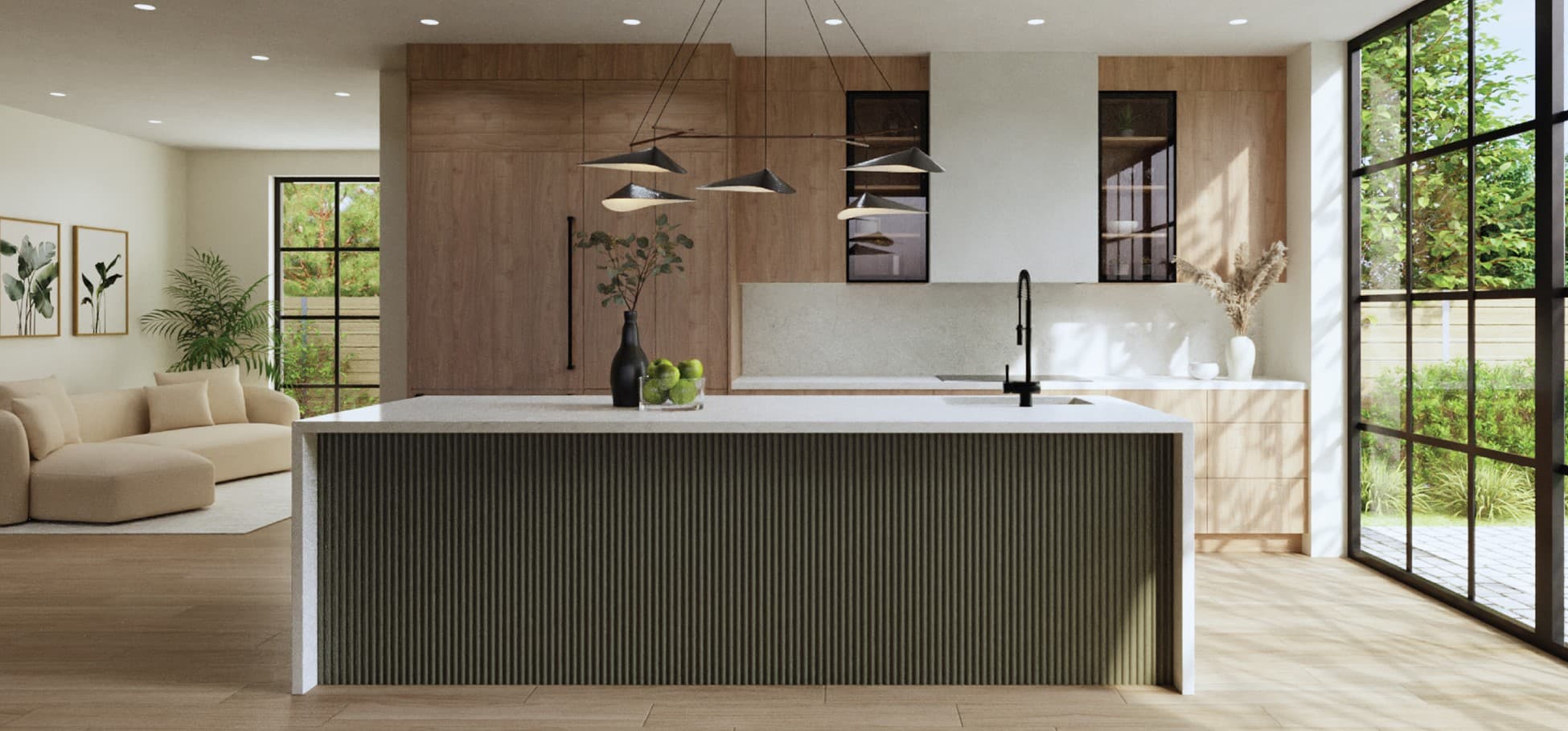
Natural Oak + Cobblestone — "leans into the earthy, wellness-inspired direction we continue to see throughout the design industry," adding richness while keeping that natural, organic feel.
Natural Oak + Stone — for a lighter, contemporary look. The combination "feels effortless and architectural,"
Kelly says, "allowing texture and craftsmanship to become the focal points."
Finish with aged brass or warm gold hardware, and you're basically done.

Sunrise or Sunset?
Natural Oak is morning — bright, airy, honeyed, the flecking whispering beneath pale gold. It loves light stone, brass, and breezy, open palettes, and it makes a small kitchen feel larger and a large one feel like a deep breath.
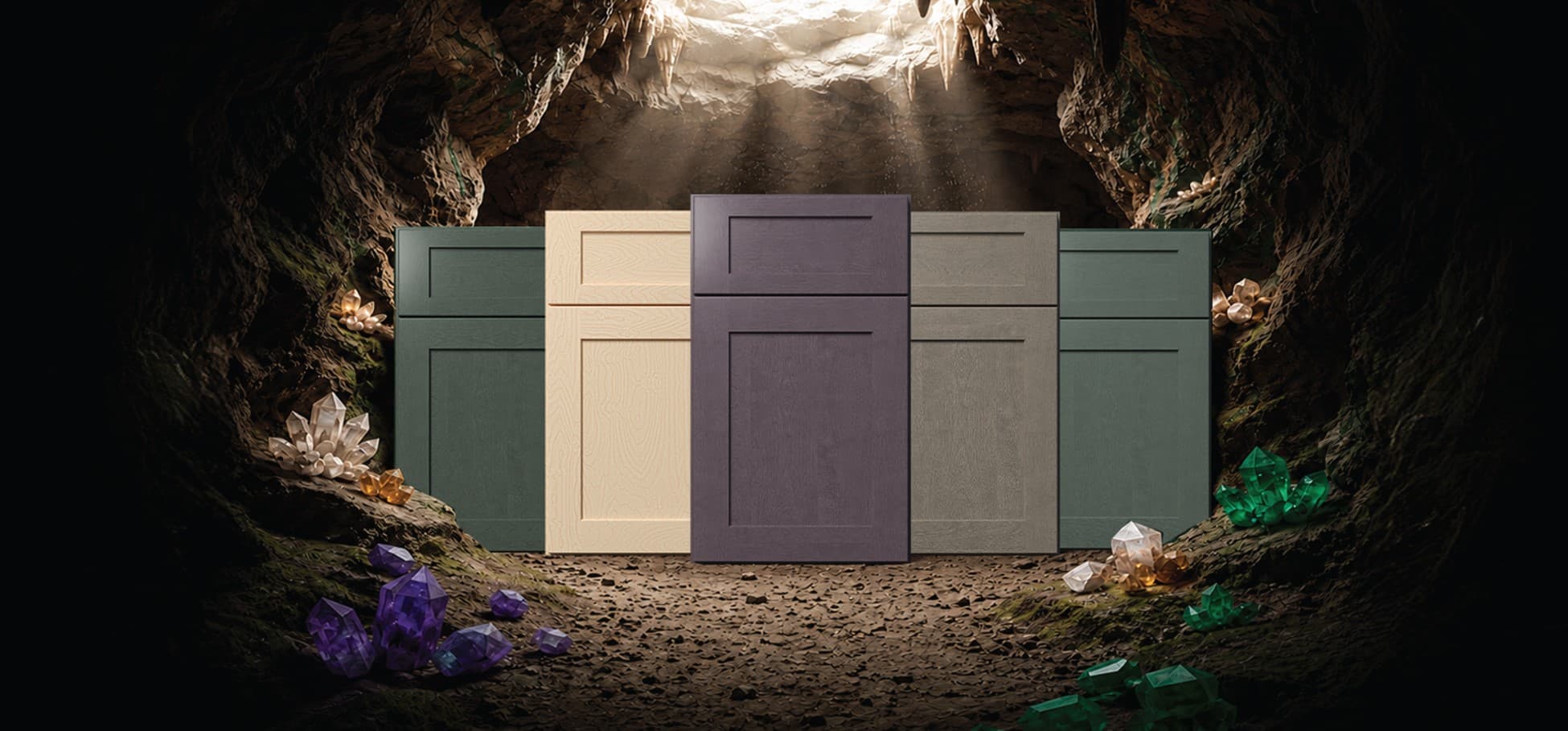
Desert Oak is evening — a warm, earthy brown, like sun-dried linen or pale sand. Its richer tone pulls the medullary rays forward and lets the flecking become the headline. It's grounded without being heavy, and it sits beautifully alongside clay, leather, and deeper neutrals.

Grown, Not Generated (Sorry, Robots)
There's a reason all of this feels like it matters more right now. We're living in an age of infinite copies endless identical things, conjured and duplicated in seconds. Against that, a real piece of wood is almost radical. It has an origin. It carries the weather of the decades it grew through.
The Japanese have a word for the beauty in that: wabi-sabi the grace of the imperfect, the unrepeatable, the made-by-time. Every Natural Oak door lives by it.

Read the Fine Grain
Want the full scoop before you pick? We wrote a short, no-jargon Oak Guide what to expect from real oak, plus how Natural and Desert Oak each catch the light.